
Introducing Polytunity at UNDP
The polycrisis feels paralyzing if you rely on yesterday's paradigm to cope with today's disruptions

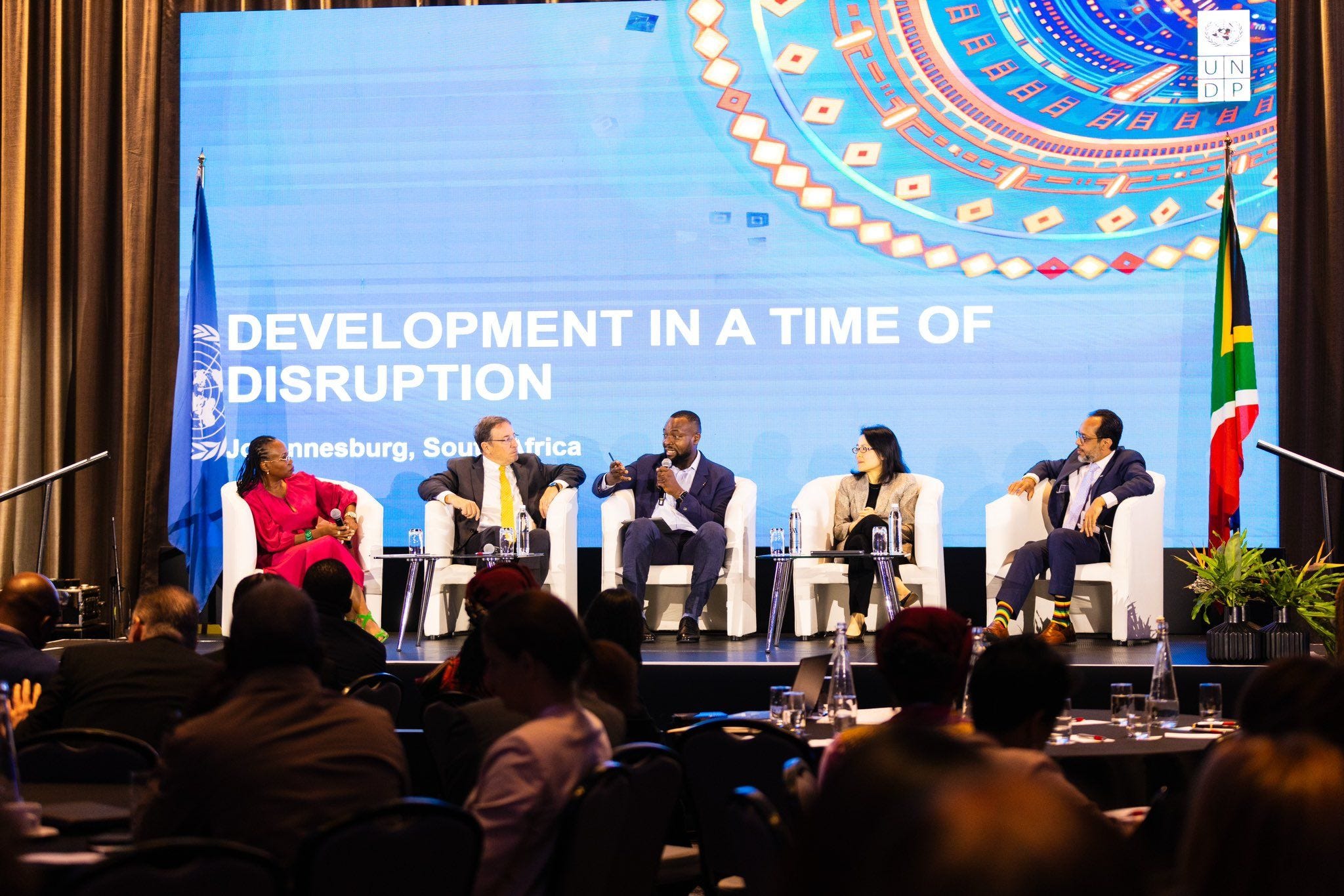
This is a lightly edited transcript of remarks by Yuen Yuen Ang, Alfred Chandler Chair Professor of Political Economy at Johns Hopkins University, at the UNDP Global Leadership Retreat in Johannesburg, South Africa, on 27 November, 2024.
The panel was chaired by UNDP Chief Administrator Achim Steiner, and included Nigerian Minister Bosun Tijani and Arunabha Ghosh from India. The theme was “Development in a Time of Disruption.”
The audience of hundreds of UNDP officials, who had gathered from around the world, responded with spontaneous applause. A recording is available here.
YYA: Thank you very much for the opportunity to visit this big family [UNDP]. The world is moving steadily in a multipolar direction, and that should be unambiguously good news as it implies greater equality and inclusion. Yet many experts and policymakers, especially in the Western hemisphere, react to these and other disruptions with dread. Some label it the “polycrisis.” Why is that?
Our reality is rapidly changing, but our paradigm—the mental operating system we use—is still stuck in the last century, shaped by the global institutions and norms of that era. This old paradigm has two features that go hand in hand.
Mechanical Logic
The first is the mechanical logic—an outgrowth of industrialization. We take complex systems, whether in nature or society, and reduce them to simplistic mechanical models. This logic pervades all areas of development policy, and indeed much of modern life. Log-frames, siloed operations, an obsession with control over adaptation, and the inability to distinguish risk from uncertainty (where risk is a known problem you can control, and uncertainty is a possibility that might be good or bad) – these are all symptoms. This logic shows up everywhere in our activities.
Imposing mechanical logic on complex systems is distorting, if not outright destructive. For example, we have leveled ancient forests and turned them into monotonous farms. This generated a short-term boost in production, but scientists now know that it is causing widespread forest death that worsens climate change.
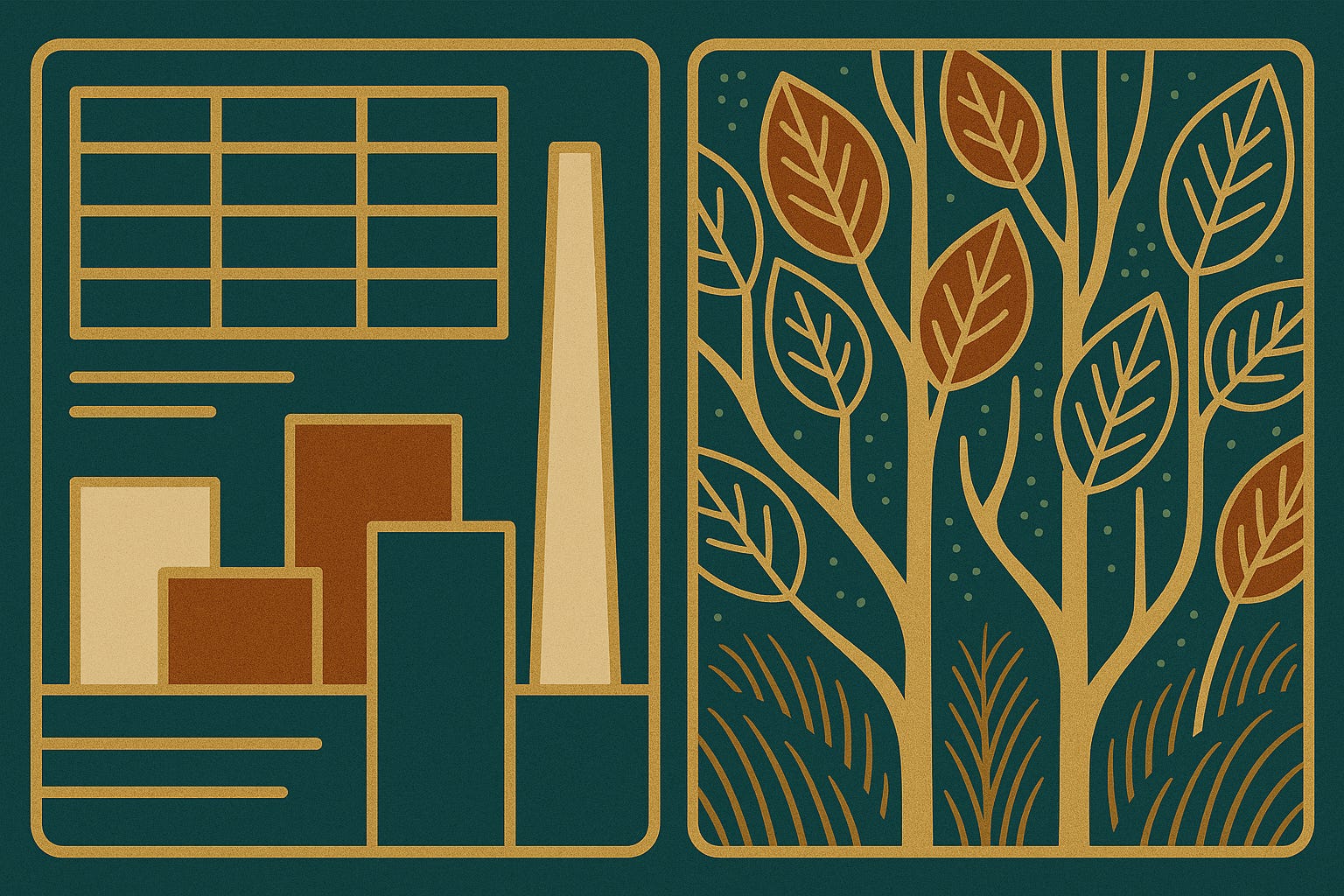
Colonial Logic
The second feature is the colonial logic: the belief that Western capitalist democracy is the endpoint of human evolution. In the 1990s, this was called the “end of history”, and the rest of the world was expected to “catch up”—in other words, assimilate.
Colonial logic creates two major blind spots:
First, it prevents us from seeing alternative paths of development and governance. With one idealized standard, anyone unlike the US, UK, or Denmark is deemed deficient. We talk about inclusion, but in practice, differences are seen as defects.
Second, it blinds the Western establishment to longstanding internal problems with capitalism and democracy in their own societies.
Disruption triggers deep anxieties because it exposes the failures of these two outdated logics.
Enter Polytunity
Here’s the takeaway: development today is not just a problem for the poor; it’s also a problem for the rich. We need to challenge the ingrained habit of seeing development only as a “poor country problem,” because the real challenges cut across all categories.
Meanwhile, the global majority is increasingly uninterested in joining a value system where they are judged by their distance from the liberal West—which they see are in trouble today.
For those clinging to the old order, these changes feel threatening. But for anyone willing to adopt a disruptive spirit, this is a polytunity. It’s a rare chance to question the industrial-colonial paradigm and replace it with something suited for a complex, multipolar world.
Crucially, UNDP is positioned for this mission: paradigm shifts cannot be accomplished by individual countries acting alone. Changing development’s operating system is like updating the OS on your device—once you do, everything else transforms with it. And building such a shared platform is, ultimately, a global public good.
Given that my five minutes is up, I have to stop here. I should mention that [interrupted by applause]… Thank you very much… Yesterday I publish an editorial in Project Syndicate, “Doing Development in the Polycrisis,” where I highlight three opportunities for new thinking and action. I’m happy to talk more during the Q&A.
To Learn More
Speech – UNDP Keynote: Listen to remarks on the keynote panel by Ang and other speakers
Op-ed – Doing Development in the Polycrisis: Ang elaborates on her keynote in this Project Syndicate article, translated into French and Spanish.
Report - From Polycrisis to Polytunity: In this UNDP Report, Ang goes further to introduce AIM (Adaptive, Inclusive, Moral) Political Economy as an intellectual foundation for the polytunity, highlighting applications from her books.