
From Polytunity to Poliunidad
When polytunity moves across languages (to Spanish) and sectors (to organizations)

If polycrisis is the language for mourning the end of the old order, polytunity is the language of innovators ready to build a new one.
We’re sharing a Spanish-language post by Israel Alcázar, co-founder of Thinking With You, who authored “De la poli-crisis a la politurnidad.”
Alcázar takes Yuen Yuen Ang’s polytunity and AIM (Adaptive, Inclusive, Moral) paradigm not only across languages, but also to his professional field: making organisations nimble for an age of disruption.
Responding to Ang’s DSA Keynote Lecture, “From Polycrisis to Polytunity,” Alcázar agrees that “complaining” about polycrisis isn’t much use. Below, we quote translations from Alcázar’s post.
It seems we can’t go a day without someone mentioning the word “crisis.” It’s the buzzword to describe this multifaceted chaos we live in: climate crisis, economic instability, technological disruption, social tension.
Poly-crisis. All at once.
To be honest, this situation makes you want to bury your head in the sand and wait for the storm to pass. Complaining is the favorite pastime.
But what if we’re giving too much prominence to the apocalypse?
Turning the tables through polytunity, he notes, “isn’t a play on words,” rather it is an “interesting change of perspective,” with actionable implications.
Yuen Yuen Ang proposes turning the tables. She coins the term “Polytunity” as the constructive opposite of polycrisis. And no, it’s not a play on words from a self-help book; it’s a rather interesting change of perspective.
Ang’s thesis is that the term “polycrisis” (popularized by the World Economic Forum and Adam Tooze) is Eurocentric. It reflects the fear of Western elites in the face of converging threats (climate change, inequality, conflict), but offers neither a diagnosis nor solutions. For the “Global South” and marginalized groups, living amidst crises has been the norm, not an apocalyptic novelty.
The underlying reflection is that this very moment of multiple crises is, in reality, a historic opportunity to rethink the foundations of how we develop.
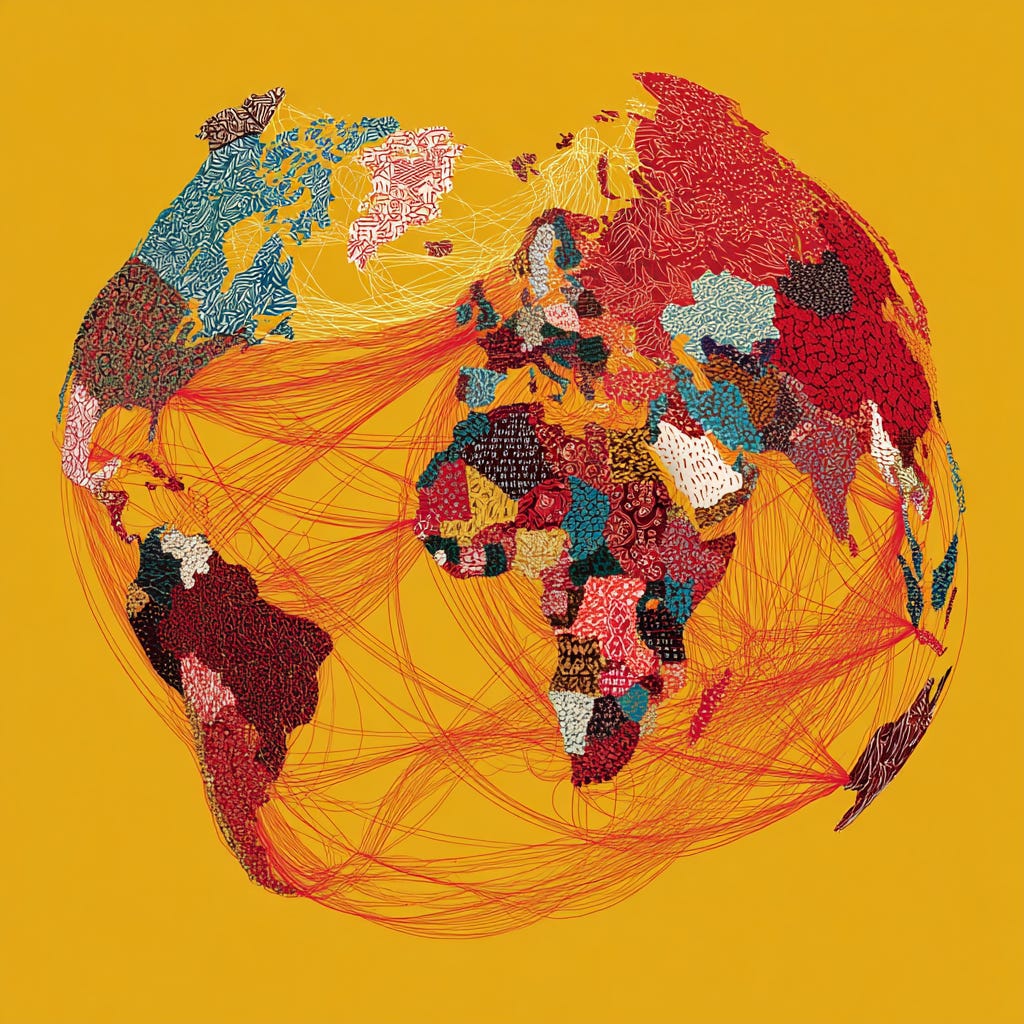
Then Alcázar goes further to make polytunity practical for his community. Writing for managers, teams, and founders, he observes how Ang’s AIM (Adaptive, Inclusive, Moral) logic can be applied to reforming organizations: directed improvisation over control, systems change over patchwork fixes, and quick adaptation over crisis reaction. Polytunity becomes something you do, not something you debate.
In his words:
Ang proposes a new form of development called AIM :
Adaptive: Replace linear/mechanical thinking with systemic thinking . Societies are complex systems, not complicated ones (like a tree, not a toaster). There is order in complexity, and science should seek it rather than simplify it.
Inclusive: Development begins with the principle of “using what you have.” Innovation doesn’t come only from elites or foreign experts, but from local actors reusing indigenous practices and resources.
Morality: Recognizing that power shapes ideas. Objectivity is not neutrality, but rather being transparent about the dynamics of power and values.
I’m bringing this directly to my field: organizations. Many companies are experiencing their own version of a polycrisis. The market is putting pressure on them, technology is overtaking them, talent isn’t as committed as before, and old management styles are no longer effective. The usual temptation is to dig in, cut back, and pray that everything goes back to “the way it was.”
But organizational “politeness” is something else entirely. It’s understanding that this pressure is the perfect excuse to do what, perhaps, we should have done long ago. It’s time to question management from top to bottom, to commit to the genuine autonomy of teams, and to build resilience based not on enduring blows, but on adapting quickly. It’s the opportunity to stop patching things up and finally talk about the structure.
Now contrast polytunity with Mark Leonard’s (Director of the European Council on Foreign Relations) report on the “exhausting and bewildering” mood at the World Economic Forum’s 2024 Conference in Davos on the polycrisis.
This year’s World Economic Forum in Davos was even more exhausting and bewildering than usual. Politicians love to say that you should never let a crisis go to waste, but even they seemed overwhelmed by a conference agenda that aimed to capture the full sweep of today’s “polycrisis.”... It is no surprise that people are anxious… We often complain that the politicians, business leaders, and diplomats who huddle annually in Davos are out of touch with everyday people. But in today’s attention economy, they are just as confused as the people they are meant to represent.
Resonating messages like Alcázar’s matter because polytunity is designed to be global. The agenda scales when it enters new languages, professions, and lived realities—especially outside elite policy forums. To borrow his words: Which side are you on?
On the side of those who describe chaos as lamentable, or on the side of those who seize the opportunity to redesign and evolve?
We share an excerpt from Alcázar’s Spanish newsletter below.
Reposted from “De la poli‑crisis a la politurnidad” (20 December 2025)
Parece que no podemos pasar un día sin que alguien mencione la palabra crisis. Es la palabra de moda para describir este caos múltiple en el que vivimos: crisis climática, inestabilidad económica, disrupción tecnológica, tensión social.
Poli-crisis. Todo a la vez.
Un panorama que invita, siendo honestos, a meter la cabeza debajo del ala y esperar a que pase el chaparrón. El lamento como deporte favorito.
Pero, ¿y si le estamos dando demasiado protagonismo al apocalipsis? La académica Yuen Yuen Ang propone darle la vuelta a la tortilla. Ella acuña el término “Politunidad” (Polytunity) como el opuesto constructivo a la policrisis. Y no, no es un juego de palabras sacado de un libro de autoayuda; es un cambio de gafas cuanto menos interesante.
La tesis de Ang es que el término “policrisis” (popularizado por el Foro Económico Mundial y Adam Tooze) es eurocéntrico. Refleja el miedo de las élites occidentales ante la convergencia de amenazas (cambio climático, desigualdad, conflicto), pero no ofrece un diagnóstico ni soluciones. Para el “Sur Global” y los grupos marginados, vivir entre crisis ha sido la norma, no una novedad apocalíptica.
La reflexión que hay detrás es que este mismo momento de múltiples crisis es, en realidad, una oportunidad histórica para repensar los fundamentos de cómo nos desarrollamos.
Cuando los sistemas que dábamos por sentados empiezan a gripar, no queda otra que mirar la maquinaria. Y ahí, en ese desmontaje forzoso, es donde surge la oportunidad de rediseñar. Es el “nunca desaproveches una buena crisis” elevado a la máxima potencia.
Ang propone una nueva forma de desarrollo llamada AIM:
Adaptativa (Adaptive): Reemplazar el pensamiento lineal/mecánico por el pensamiento sistémico. Las sociedades son sistemas complejos, no complicados (como un árbol, no como una tostadora). Hay orden en la complejidad, y la ciencia debe buscarlo en lugar de simplificarlo.
Inclusiva (Inclusive): El desarrollo empieza con el principio de “usar lo que tienes”. La innovación no viene solo de élites o expertos extranjeros, sino de actores locales reutilizando prácticas y recursos indígenas.
Moral (Moral): Reconocer que el poder moldea las ideas. La objetividad no es neutralidad, sino ser transparente sobre las dinámicas de poder y valores.
Llevo esto directamente a mi terreno, el de las organizaciones. Muchas empresas viven su propia versión de la policrisis. El mercado les aprieta, la tecnología les adelanta por la derecha, el talento no se compromete como antes y las viejas formas de gestionar ya no mueven el barco. La tentación habitual es atrincherarse, recortar y rezar para que todo vuelva a ser “como antes”.
Pero la “politunidad” organizacional es otra cosa. Es entender que esta presión es la excusa perfecta para hacer lo que, quizás, debimos hacer hace tiempo. Es el momento de cuestionar el management de arriba a abajo, de apostar por la autonomía real de los equipos y de construir una resiliencia que no se base en aguantar golpes, sino en adaptarse rápido. Es la oportunidad de dejar de poner parches y hablar, por fin, de la estructura.
El ruido de la policrisis es ensordecedor, sí. Pero la “politunidad” exige que nos pongamos los auriculares de la acción. Nos obliga a dejar de lamentarnos por los fundamentos que se agrietan y nos invita a ser quienes construyen los nuevos.
Y tu, ¿en qué lado estás? ¿En el de los que describen el caos como lameto o en el de los que aprovechan la oportunidad para rediseñar y evolucionar?
Note: As Polytunity circulates in Spanish, it appears under multiple translations. In the post shared here, Israel Alcázar uses politurnidad. Other Spanish translations include poliunidad, used in Listín Diario, and politunidad, used in Perfil.
Learn more about Israel Alcazar
El futuro es ayer – Israel’s Spanish newsletter on the future of work and organisations

Learn more about Polytunity
Listen to Ang’s DSA Keynote “From Polytunity to Polycrisis”
Read her latest op-ed at Project Syndicate: The World Order After 2025
Thanks a lot Yuen for your mention. I m very happy you liked my article about the term you coined.